Wednesday, 20 January 2021

Farewell Planting with Mr.Graham Silverthorne

In honour of Mr. Silverthorne, our head of campus, who left UWCSEA East in January, the Parents' Association with Ms. Psillides approached our service group for the opportunity to plant an indigenous rainforest tree on campus. On behalf of Rainforest Restoration, Anthony joined the planting and explained the significance and importance of conserving indigenous tree species in Singapore.


This planting is a reminder of Mr. Silverthorne’s lasting impact on our College even as he moves on from UWCSEA and would also further enhance the biodiversity of our College and local community. Fittingly, the tree is symbolic of our College's committment to sustainability.

Cynometra ramiflora is a tree indigenous to South East Asia, and it has been documented that it can grow up to 26 meters in height (Canopy height is from 20 to 30 meters). When mature, the tree flowers as delicate, white clusters. It grows natively in mangrove forests and along coastline areas of Singapore, and prefers medium to full sunlight. However, due to decades of urbanisation and coastal development, it is unfortunately critically endangered in Singapore. It is now confined in the wild to a limited range in select nature parks and protected areas. This is why it is important that we can conserve the biodiversity of Singapore by restoring native tree species to our local environment.

Rainforest Restoration has been generously supported by the Kirtida and Bharat Mekani Environmental Sustainability Fund via the UWCSEA Foundation and our longstanding collaboration with the Plant Resource Center at the Singapore Botanical Gardens. They provide our nursery with indigenous rainforest trees, including the Cynometra ramiflora that was given to us to nurture several years back. We would like to also extend our thanks to the facilities team and service deparment for organizing this valuable event. 

References:

Cynometra Ramiflora L. (April 20, 2020). Flora and Fauna Web. National Parks Board. Accessed from: https://www.nparks.gov.sg/florafaunaweb/flora/2/8/2834.


Monday, 12 October 2020

Three new groups learning tree nursery skills

With Local Service suspended due to COVID-19, we have even more students than usual milling about in our tree nursery. A Middle school group works with Mr Meehan on Wednesday; a Grade 9-10 group with Mr Daniels and Ms Haley on Thursday; and a Grade 11 group with Mr Tomlin on Friday. Meanwhile, a URRP GC group also meets at lunchtime on Friday, literally getting their hands dirty. As if that weren't enough, a Magic Mulch group meets on Thursday afternoon, taking invaluable compost to trees around the campus that started life in the nursery. The new URRP groups are following a basic tree nursery course that introduces them to the theory and practice of how to:

  1. germinate seeds
  2. 'pot up' seedlings
  3. grow new trees (clones) from cuttings
  4. grow new trees by means of air layering ('marcottage')
  5. plant a tree

It's an exciting time — especially with NParks keen to involve us in their One Million Trees movement — and we look forward to a new batch of students coming through the nursery in Season 2 (Nov-Jan). The late Nobel Peace Prize winner Waangari Maathai once said, “Until you dig a hole, you plant a tree, you water it and make it survive, you haven’t done a thing. You are just talking.” Keep digging!

Collaboration with NParks: One Million Trees

We are delighted to be part of a collaboration with NParks, supporting the One Million Trees movement. This is a nationwide effort to plant a million trees over the next 10 years and we hope that thousands of those trees will be raised in our new GreenHeart nursery.

UWCSEA Rainforest Restoration Project (URRP) staff met with NParks staff on 24 September. We have already received seeds from NParks and plans are afoot to plant URRP-raised saplings in parts of the Southern Ridges, such as Kent Ridge Park and the Rail Corridor. URRP staff will also visit theNParks nursery at Pasir Panjang during the October half-term break.

Friday, 17 April 2020

Rainforest Restoration Project film

In 2018/2019, Nicolas Sugandi (UWCSEA Dover, Grade 12 film student) worked with UWCSEA's former Director of Sustainability, Nathan Hunt, to capture the work of the Rainforest Restoration Project in a short film.

As well as sheltering hundreds of often critically endangered tree seedlings, the specialist nurseries on both UWCSEA campuses are helping to nurture the next generation of reforestation scientists and advocates. Our long-term partnership with the National University of Singapore (NUS) and NParks, the Singapore government’s National Parks Board, is providing both excellent opportunities for applied learning for UWCSEA students and exciting chances to contribute to Singapore’s national strategy for biodiversity conservation.

Watch the film below.


Monday, 30 March 2020

Alexandra Park tree planting

Ms Edwards and Ms Henry
barely breaking a sweat.
As a slightly belated celebration of International Day of Forests (21 March), a small group of URRP staff and students planted ten trees at the Alexandra Park estate on 25 March. A pair of white-collared kingfishers flashed aquamarine between the existing trees and called out raucously as we worked. 

All of the trees were raised in our Dover nursery and all but one (Broad-leafed Mahogany) was an indigenous species. The full list comprised:
  • Barringtonia asiatica (Fishkiller)
  • Cynometra cauliflora (Nam Nam)
  • Hopea bracteata (Merawan Ungu)
  • Hopea ferrea (Ceylon Ironwood)
  • Litsea elliptica 
  • Mimusops elengi (Tanjung, Spanish Cherry)
  • RĂ­ona helped plant five trees.

  • Moringa oleifera (Horse-radish tree)
  • Shorea materialis 
  • Sterculia foetida (Hazel Sterculia, Java Olive)
  • Swietenia macrophylla (Broad-leaved Mahogany)


The Sterculia tree has an interesting etymology: Sterculius was the Roman god of cow dung and "foetida" means stinking! The name refers to the fact that all parts of the tree exude an unpleasant smell while it is flowering.

Mr Daniels takes the strain while
working out with Moringa.

Mea has planted many trees
over the past two years.

Neat Nursery

In recent weeks, Andy Tan and his landscaping team, together with Facilities staff and outside contractors, have done an impressive job of reorganising the Dover nursery. Rotting wood and broken pots have been disposed of, replaced by lightweight metal tables with mesh tops and relaid artificial turf. Even our Shade House has had a makeover.

The Rainforest Restoration Project should soon be moving its base to the space near the new Ecology Centre. As we do so, we should dispose of our much-loved but dilapidated cupboards. As ever, we should ensure all our species are labelled and bring our inventory up to date. A next step may be to seek new stock from NParks while also using cuttings to propagate some indigenous species.

COVID-19 has interrupted our meetings with NParks partners, but we are exploring the possibility of being assigned a section of the Rail Corridor for reforestation, from seedling collection, through nursery care, planting and subsequent monitoring of tree growth.


Thursday, 27 February 2020

New Season for East RFRP


Students learning about species and relevant identification skills
(Species in picture: Adenanthera pavonina)
Students learning about species and relevant identification skills


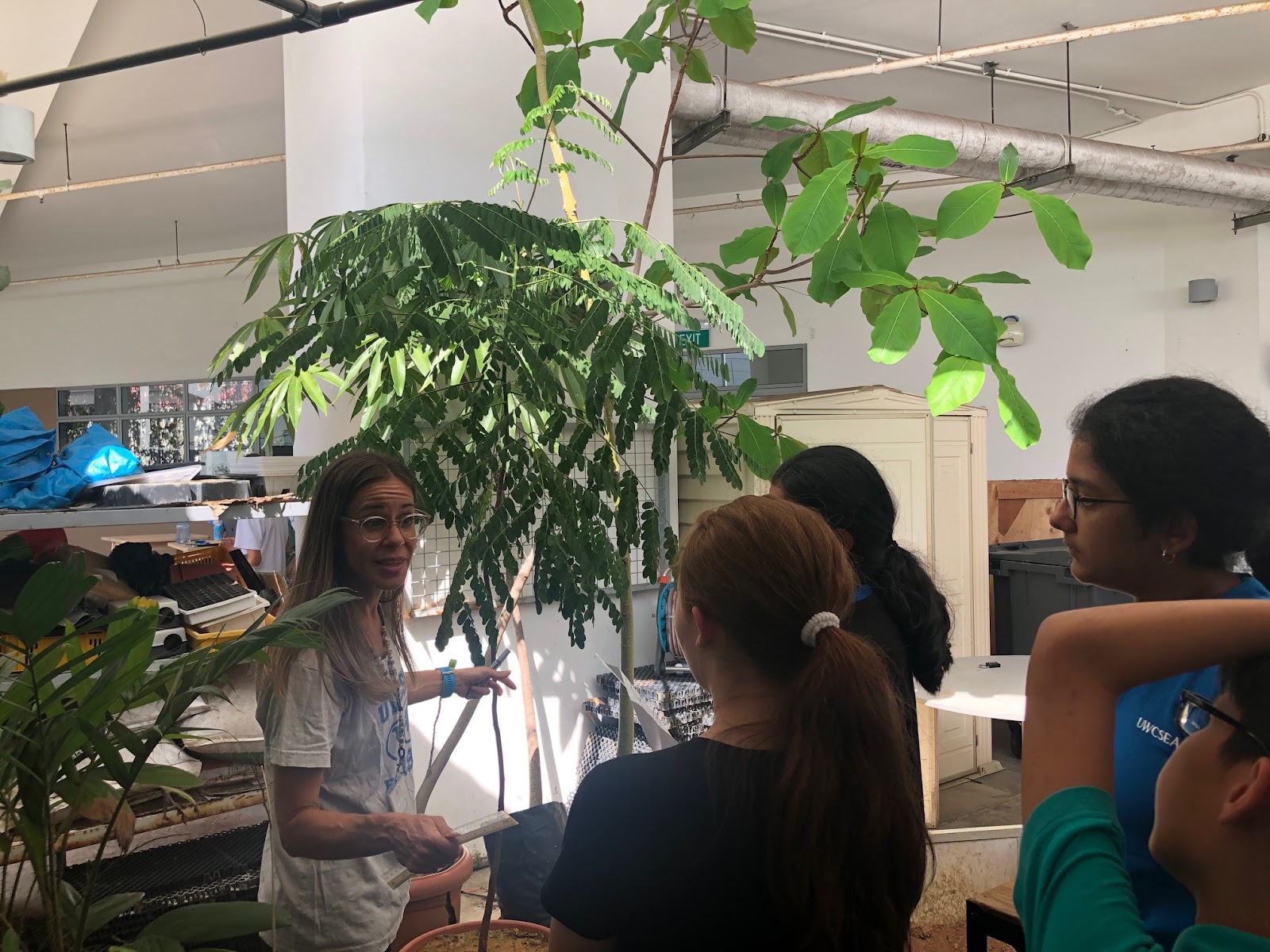
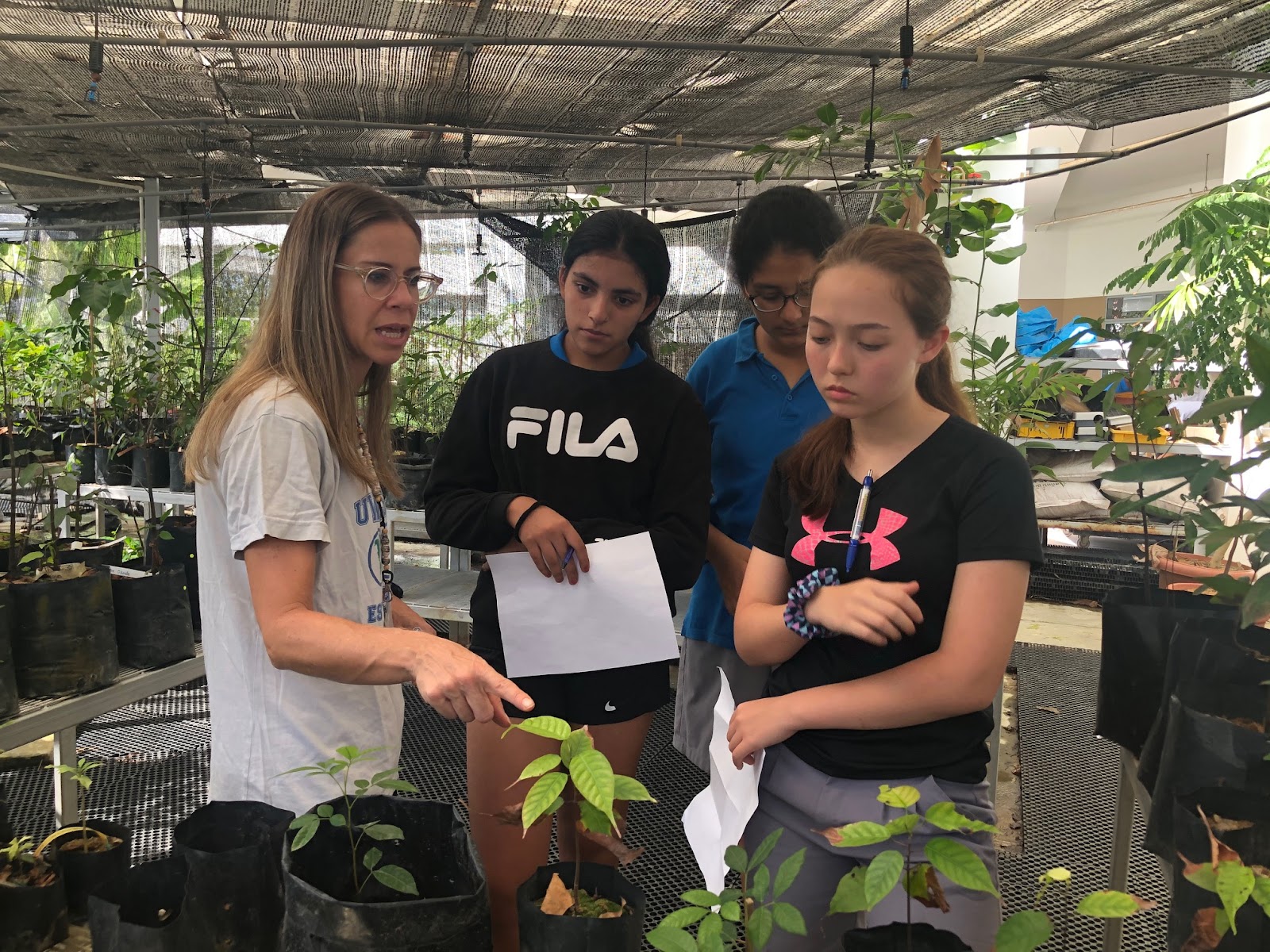
With the coming of the new season as too are new challenges and experiences. New students have for the second time this year joined the service marking the start of season 3. Taking new students to explore the campus flora and fauna is our first key step into their integration, and a key exciting event for the newcomers. However challenges await, a lack of plant resource availability has forced us to explore new avenues in our nursery; while new students must be taught essential skills. They have begun learning about the different species on campus, distinguishing them through observing features such as leaf shape, height and colour. 

While some of the students tried to finish our plant inventory management project, a crucial but painstaking process, others watered and maintained the plants. Nonetheless, with these newcomers comes opportunities for growth, both in the nursery and at heart as a new generation of conservationists is born.


Sheet used for identification (leaf shapes)
Students actively communicating

Wednesday, 19 February 2020

It has been a while ...


This poor old blog has been neglected for a while — a long while. Let's try to put some life back into it.

URRP founder Nathan Hunt moved on to greener (well, colder) pastures in June. Much missed, but the good news is that we have a strong staff team in the shape of three High School Biology teachers, Amy Woolloff, Barry Daniels and Judson Tomlin, as well as Simon Bignell (Geography and Environmental Systems & Society teacher) and veteran amateur Frankie Meehan. Barry leads the GC; Amy, Judson (and occasionally Barry) co-lead the HS service group; and Simon and Frankie co-lead the Middle School group.

So what have we been up to? Quite an assortment of things, as is always the case with tree husbandry:
  • reorganising the Shade House (thank you, Callista, for the new tables layout); watering, weeding and discarding saplings;
  • checking our marcotted shoots (zero success!) and our cuttings that we had kept for months in transparent plastic "tents" (a success rate of about 60%);
  • mulching many dozens of trees that URRP students had planted out in the past year, especially in May/June 2019;
  • replacing a Syzygium cuminii behind the Art block that had been ravaged by a fungal infection;
  • helping UWCSEA Foundation donor Cathia Magnenat and her sons Quentin and Lohan plant a Cynometra cauliflora (on 23 Jan.) near the swings behind the Art block;
  • helping another donor, Jennifer Zhang, and her children Tony (Class of 2019), Maggie and Ivy, plant three beautiful Cratoxylum cauliflora trees (on 24 Jan.) by the rainwater catchment stream on level 3 of the Middle School block

Wednesday, 5 June 2019

Congratulations to our latest RRP grads Naomi and George!


After 3 plus years of superb learning and dedicated service to the Dover campus and the wider community, both sat for their Certificate in Tropical Forest Restoration Practice last week.

A three-hour practical and theory exam was the final assessment and both passed with distinction, despite having only just finished their (less important) IB exams and graduated from UWCSEA!

In an even more fitting end to their work here, both will join us for a planting session with Nparks' Friends of Trees at the new national gardens at Jurong Lakes on Saturday, an event organised by Naomi and that for the first time will be using trees raised in our own nurseries.

Thanks to Naomi & George for making us proud and best wishes for your exciting futures.


Thursday, 9 May 2019

Grade 9 Geography Class Tour


On Friday, 3rd May, we had our first ever visit from a Grade 9 Geography class. They are currently learning about rainforest conservation and its adaptations and had the opportunity to discover these through hands-on activities. They learnt about drip-tips from our Hopea Ferrea and about the amazing nutritional properties of Moringa. It was a wonderful visit, and we look forward to hosting more tours in the near future!

Tuesday, 9 April 2019

RRP & RVRC sharing their learning for Forest Restoration


RRP’s strong partnership with the National University of Singapore and NParks is providing excellent opportunities for applied learning for UWCSEA students and exciting chances to share our work too.

Last weekend saw us participate in a Forest Restoration workshop kindly hosted by NParks at Bukit Timah Nature Reserve Headquarters. The workshop was the initiative of Dr. Chua Siew Chin, a lecturer at NUS’ Ridge View Residential College (RVRC), an experienced researcher and key advocate for tropical forest restoration here on the island. As well as developing learning modules for her RVRC students, Dr. Chua has also been kindly supervising one of our own members in their I.B Extended Essay research. The workshop was an opportunity to showcase this learning as well as develop more community engagement in this important work.

RRP’s Naomi presented her experimental study of the performance of rainforest seedlings in degraded soil from secondary forest sites known locally as ‘Adinandra belukar forest’ for the dominant species that has populated these abandoned agricultural plots. As much of the reforestation work in Singapore will be enriching these relatively species-poor, nutrient deficient sites, Naomi’s research contributes to much-needed knowledge about the best strategies for ensuring successful regeneration of primary forest species. We are hoping that her study might eventually be published in one of Singapore’s scientific journals.

Naomi shares her research from the Dover nursery
RVRC students showcased a wide variety of studies
RVRC students likewise presented the preliminary findings from their ongoing research on the reforestation site in Chestnut Park featured previously on this blog. It will be interesting to follow the progress of the plots that were subject to different treatments such as mulching, weeding and interspersed planting with leguminous (nitrogen-fixing) species.

Mr Zhou Boyi shows us Nparks' plans to engage the community
Alongside Dr. Chua, NParks Conservation Manager Zhou Boyi led a discussion on how the audience of educators and students could be involved in Singapore’s ambitious new Reforestation Plan that was introduced by Director of Conservation research, Dr. Adrian Loo. The 10 year plan will see over 250,000 native trees and shrubs planted mainly in the Nature Parks that act as buffer zones for the more biodiverse Central Catchment and Bukit Timah Nature Reserves. Developing more campus nurseries such as ours was seen as a key strategy to engage more young people, as well as provide the saplings necessary to meet this target. We were very happy to meet more interested schools at the event and invite them to UWC. Recent months have already seen visits from Dulwich international, Hwa Chong, Commonwealth Secondary and ACS(I) and more are planned.

Our big thanks to Dr. Chua for arranging this very successful sharing session and to Naomi for raising the profile of RRP in the academic community! 

Naomi's poster presentation summarised her Extended Essay Research
Dr Chua Siew Chin opens the discussion after an introduction to the primary forest in the reserve.
George, Hermann and Anthony contributed for RRP too.

Sunday, 24 March 2019

ACS Tour


On Friday, 22nd February, students from ACS came for a visit. Members of Rainforest Restoration Project showed them around the nursery and let them play the tree ID games. It was a bit challenging, but they were all very enthusiastic!

We also showed ACS students the techniques of potting up and watering seedlings, and we gave the longan seedlings they planted themselves as presents.


Thursday, 21 March 2019

New Season, New People, New Planting

On Thursday, 14th of March, we planted rainforest and fruit trees from our nursery in the yards of several residents in Woodleigh as part of our tree adoption program. This project follows the recent community outreach we introduced at the Earthfest event early this year at the Marina Barrage. The residents very kindly offered their support to take care of the species that we had nurtured.

We had planted a great variety of trees, which include:

Edible Fruit Trees:
      Rambutan
      Moringa
      Angsana
      Longan
      Mango
      Mangosteen
      Triphasia trifolia

Endangered Rainforest Trees:
      Hopea helferi
      Hopea odorata
      Diospyros oblonga
      Cynometra cauliflora
      Shorea sumatrana

Local Common Trees:
      Peltophorum pterocarpum (Yellow flame)
      Syzygium grande

On the day, we met up with Dover with the trees between us and headed off to 7 properties. For 2 hours, we loosened soil, hacked away at roots, and after mulching the area plentifully to support the root development of the trees, we carefully transplanted our trees into the earth. It was refreshing to work alongside passionate members and residents, content that the saplings are now in their new, permanent home. As we waved goodbye to smiling, grateful families, we could feel the warmth of accomplishment beneath our fresh layer of mud.


The event was an excellent immersive learning experience for many of the new members in the Rainforest Restoration Project. The collaboration with the students from the Dover campus was an exciting activity for all of us. We would like to thank all of the generous residents of the estates that we planted in. We hope to work even more with others in the future.


By Jia Cheng Shen, Ran McClean, Ethan Lim